Pokemon Pack Opening Simulator
Open Pokemon packs online: pick a set, choose what you're opening and tear the foil. Real pull rates and live card prices, free with no sign-up.
- 37
- Sets
- 7,100+
- Cards
- Live
- Card prices
- Free
- No sign-up
Mega Evolution 7 sets · 2025–2026
Scarlet & Violet 14 sets · 2023–2025
Sword & Shield 10 sets · 2020–2023
Base Set era 5 sets · 1999–2000
Japanese 1 set · 2026
No set matches that. Try "151", "Evolving" or "Japanese".
A Pokemon card simulator built on the real pack structure, community-verified pull rates and live card values, from a single booster pack to a full booster box. No account, no cost, just the honest odds.
Want the exact odds for every set and product? Open the pull rate calculator →
Storm Emeralda is the Japanese print of Delta Reign: the same set, released in Japan on 31 July and in English on 6 November 2026. Shop Delta Reign.
Simulator results are random and are not indicative of real product contents; nothing of value is won or purchasable here. Pull rates are community-sourced estimates. Card images are the property of The Pokemon Company International / Nintendo / Creatures / GAME FREAK, used for identification only.
This set didn't load. Check your connection and try again, or see every set's odds on the pull rate calculator.
Tear across the foil to open
Ripping for real? Subscribers get first access to new Pokémon Center exclusives.
Get early accessWant the real packs?
We sell new Pokémon Center exclusive sets, factory sealed and shipped worldwide from the UK. Subscribers get first access to every pre-order. No spam, unsubscribe anytime.
Get early accessPokemon card simulator, explained
How the simulator works, where the odds come from, and what it can and can't tell you.
Yes, the simulator uses the same community-verified per-pack rates as our pull rate calculator, cross-checked against large tracked-opening samples and set data. The Pokemon Company doesn't publish official rates, so treat everything as a well-evidenced estimate.
No. Every simulated pack is random, exactly like a real one. A lucky virtual box says nothing about the sealed box on your shelf. What it does give you is an honest feel for the odds before you buy: open a few virtual Elite Trainer Boxes and "1 in 80 packs" stops being abstract.
A modern pack (Scarlet & Violet and Mega Evolution) holds ten cards plus a basic Energy: four Commons, three Uncommons, two reverse-holo slots and one rare-or-better slot, with the rarest card at the back. Illustration Rares and Special Illustration Rares take the place of the second reverse holo when they appear, while Double Rares and Ultra Rares come from the rare slot, so one pack can hold two hits. Sword & Shield packs had five Commons and a single reverse-holo slot, which is where Trainer Gallery, Radiant and Amazing Rares turned up; every V, VMAX, alternate art and gold card came from the rare slot. The original Wizards of the Coast packs (1999 to 2000) held eleven cards and no reverse holos: seven Commons, three Uncommons and one rare slot that was a holo about one pack in three. Base Set and Base Set 2 swapped two of those Commons for basic Energy.
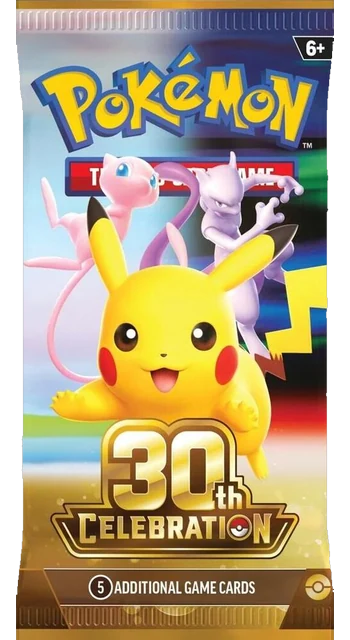
37 sets and counting, from 1st Edition Base Set (1999) to 30th Celebration (2026): every Mega Evolution and Scarlet & Violet set, the Sword & Shield sets from Vivid Voltage to Crown Zenith (Evolving Skies included), the original Wizards of the Coast sets (Base Set, Jungle, Fossil and Team Rocket in 1st Edition, plus Base Set 2), and Storm Emeralda in Japanese. Each runs on the same verified odds as our pull rate calculator, and new sets are added around each launch.
Yes. The simulator includes Storm Emeralda, the Japanese set that becomes Delta Reign when it releases in English on 6 November 2026. That means you can rip virtual Mega Rayquaza ex packs months before the English set exists. Japanese packs use the real 5-card layout and community box odds, with the proper Japanese tiers: Art Rare, Super Rare, Special Art Rare and the Mega Ultra Rare.
Yes. Base Set, Jungle, Fossil and Team Rocket open as 1st Edition packs, the first print run with the 1st Edition stamp, and Base Set 2 (which only had one print) opens as it was sold in 2000. Each pack holds eleven cards with a holo about one pack in three, and every holo shows its ungraded 1st Edition value, Charizard included. Team Rocket also hides the secret Dark Raichu, about 1 in 55 packs. The full odds for each set are on the pull rate calculator.
Yes. Every card you pull carries a live market value, and the pack and session summaries total what your virtual pulls would be worth. Values come from live TCG market data (1st Edition vintage cards use ungraded sold prices, refreshed weekly), so a big hit means the same thing here as it does in a real rip.
A god pack swaps a pack's normal cards for top-rarity hits. In Ascended Heroes one holds three Mega Attack Rares and seven Special Illustration Rares, but no reliable count has measured how often they turn up, so the simulator leaves them out rather than guess.
Every modern pack includes one basic energy alongside the ten cards. The simulator counts it in the pack summary but skips it in the flip sequence: ten reveals with a dead card at the end makes for worse pacing, and nobody is chasing a basic energy. Base Set and Base Set 2 are the exception: their two basic Energy cards are numbered cards in the set itself, so the simulator deals them and flips them first.
Completely free. No account, no download, no limit on how many packs you rip. It runs in your browser on desktop and mobile: a booster pack simulator for all 37 sets, from a single pack to a full box.
No. Pull rates and card condition inside factory-sealed Pokemon TCG products are set by the manufacturer. No retailer can influence or guarantee what's inside. The simulator exists so you can calibrate your expectations before buying real sealed product.